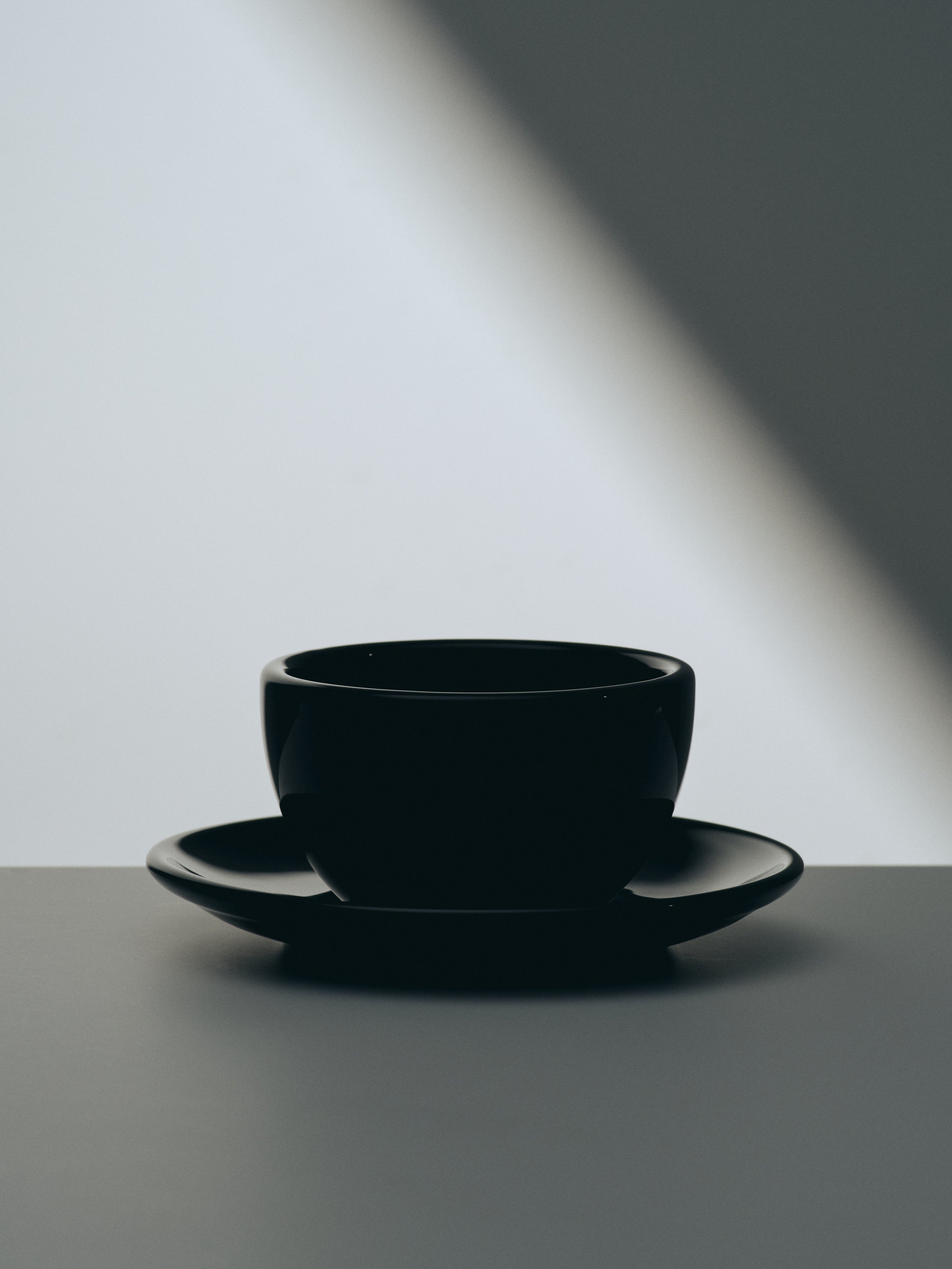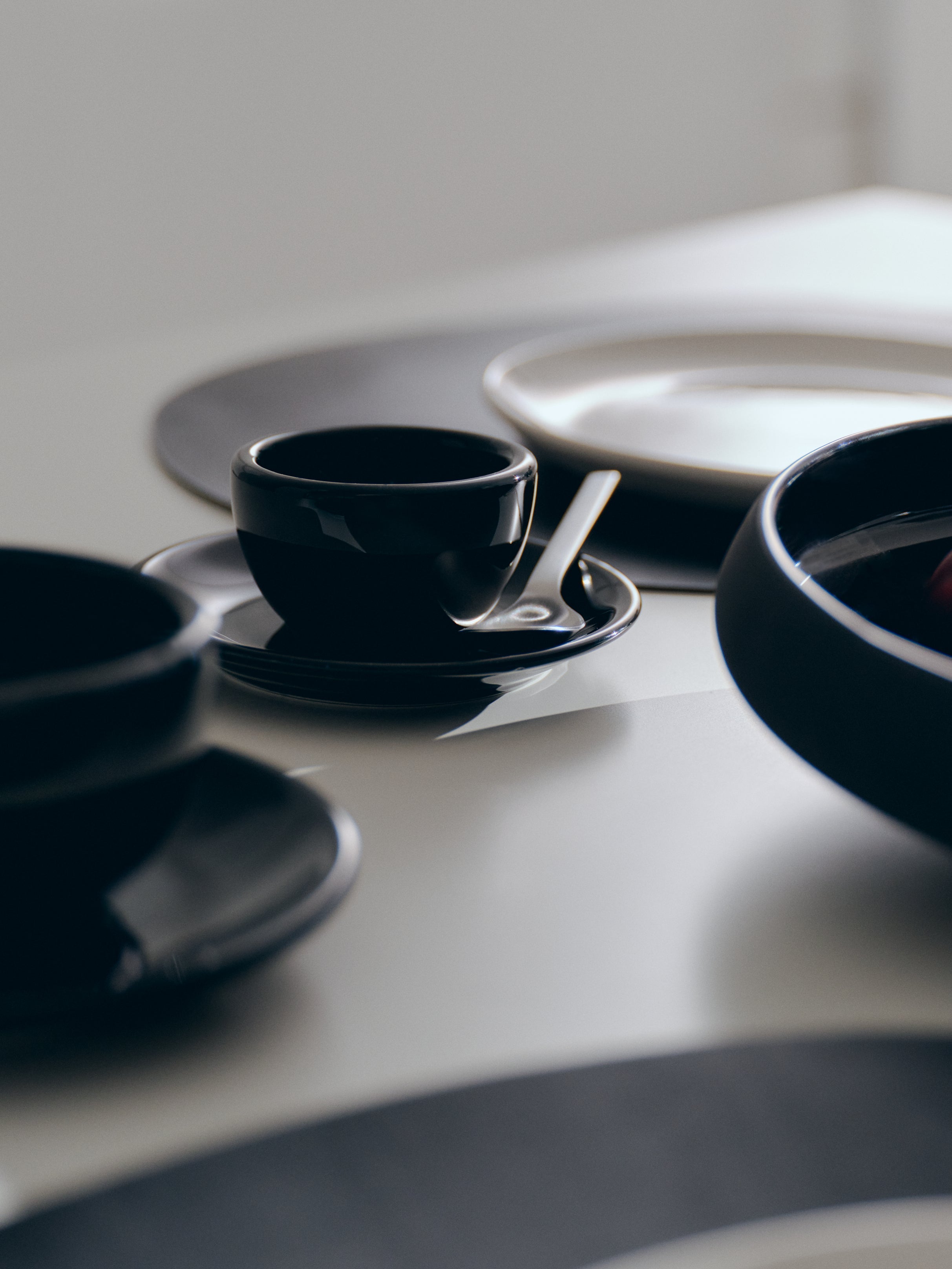
Anyone who loves espresso or cappuccino knows the subtle differences. Between beans, roasts, and machines. And eventually, between cups too. You can recognize a good espresso cup even before you take the first sip: by its weight in your hand, by the way it retains heat, by its shape. You’ll notice a bad cup by the second sip at the latest—when the espresso has already gone cold.
So that you can fully enjoy your espresso and cappuccino, we’ll tell you here how to instantly recognize a high-quality cup—both in-store and in our Within Mood online shop. Wall thickness, material, shape, handle—let’s get into the details.
Wall thickness: Why thick-walled espresso cups are the better choice
Thick walls are not a matter of taste, but of function: designing espresso cups with thick walls means that the cup retains more heat. While a thin porcelain wall looks delicate and elegant on fine tableware, it cools the espresso much faster. Therefore, it is better to choose a thick-walled cup. The wall thickness of good models is between 4 and 8 mm. Anyone who drinks their espresso slowly or likes to wait a moment until the foam has settled will immediately notice the difference.
In-store, you can recognize them at first glance—at the latest when you hold them in your hands and feel their weight. Online, the product description often states ‘thick-walled’ or ‘thick walls’.
If you want to enjoy your espresso even more like a true barista: briefly preheat your cups with hot water before pouring.
Another advantage: thick-walled cups are more robust. They withstand everyday use better than thin-walled versions—and are therefore even more timeless.
Material: Porcelain, ceramic—which is better?
The two most commonly used materials for espresso and cappuccino cups are porcelain and ceramic. Both have their place—but they differ in several key ways.
Porcelain is fired at high temperatures, absorbs almost no odors or flavors, and is easy to clean. A handleless porcelain cup feels smooth and cool—until it is filled. Porcelain is dishwasher-safe and retains its shape for years with proper care. It is the classic material for espresso cups because it is flavor-neutral: The coffee tastes just as it should.
Ceramic is more porous, has a rougher surface, and a warmer, more artisanal appearance. A handleless ceramic cup often feels heavier and more earthy—which for many people is part of the experience. One disadvantage: ceramic can absorb flavors more easily, which is why regular and thorough cleaning is important. High-quality glazed ceramic, on the other hand, is significantly easier to care for.
We deliberately have our espresso and cappuccino cups made of porcelain. The material is durable, easy to care for, and flavor-neutral. This keeps the focus where it belongs: on the coffee.
Handle or no handle? The case for the handleless cup
Many high-quality espresso cups come without a handle—and there is a reason for this that goes beyond aesthetics. A handleless cup conducts the heat of the cup directly to your hands. It sounds trivial, but it changes the experience: You can feel whether the espresso is still hot. You hold the cup differently. You are more present while drinking.
This principle is deeply rooted in barista culture and the Italian coffee tradition. They have always relied on the classic demitasse—that is, a cup reduced to the essentials and designed without a handle. This gives you the original Italian barista experience.
Another reason we appreciate demitasses: Our handleless cups, which you receive in a set of two, are much easier and more space-efficient to store. They stack more securely, take up less space, and look neater. Especially in a minimalist coffee corner, this is a visually decisive point.
Shape and volume: What applies to espresso and cappuccino
The classic espresso cup holds between 60 and 90 ml—enough for a single or double espresso. The shape should widen slightly toward the top: This supports the crema and makes it easier to perceive the aroma of the coffee.
Cappuccino cups usually hold 150 to 200 ml. Here, a rounder shape makes sense: The milk foam distributes more evenly, and the cup sits more balanced in the hand. Anyone who wants to use the same cup for filter coffee or an Americano should choose a slightly larger volume—and be more flexible in everyday use.
Both versions benefit from a stable base. A wide base provides security—whether quickly placing it on the counter or on a coaster.
Haptics—the underestimated factor
Weight, surface, balance: The haptics of a cup determine whether you like picking it up—or not. A high-quality espresso cup should neither feel too light (then it looks cheap) nor too heavy (then every espresso feels like a workout—whether you want it to or, above all, don't want it to).
The surface also plays a major role: Matte porcelain feels different from glazed, and ceramic different from industrially manufactured material. Anyone who has the opportunity to pick up a cup before buying it should do so—and not just look at it, but hold it.
And then there is the rim of the cup: A rim that is too sharp feels uncomfortable, and with thick-walled espresso cups, you should make sure that the rim is nicely rounded.
High-quality espresso cups as a long-term decision
High-quality espresso cups are among the most important items in our kitchen repertoire. Once invested in, they become timeless companions for everyday life.
In neutral tones such as white, brown, beige, and black, they are absolute design classics and suit any set table. Anyone who wants to add colorful accents can opt for pastel and pop colors. We have designed our espresso and cappuccino cups in tones such as light blue, bright orange, and soft pink.
A cup that fits well in the hand, retains heat, does not influence the aromas, and still looks exactly the same after years as it did on the first day: That is not a trend. That is good design. And good design makes the difference—with every coffee you make.